
The recent agreement between the RBI and the Centre marks a significant step forward toward financial inclusion.

International Monetary Fund (IMF) chief economist Gita Gopinath has made a strong case for regulating cryptocurrencies, saying it will always be a challenge to ban them as they operate from offshore exchanges. Gopinath also suggested a global policy and co-ordinated action for regulating cryptocurrencies. "I think cryptocurrencies are a particular challenge for emerging markets. "It seems to be more attractive to adopt cryptocurrencies and assets in emerging economies than in advanced economies," she said while addressing an event organised by the National Council of Applied Economic Research (NCAER) on Wednesday.

Retail inflation declined to a 25-month low of 4.25 per cent in May mainly on account of softening prices of food and fuel items, with experts saying that RBI is expected to hold interest rates steady in the current fiscal. This is the fourth straight month when retail inflation has declined and the third straight month of Consumer Price Index (CPI) based inflation remaining within the RBI's comfort zone of below 6 per cent. CPI-based inflation stood at 4.7 per cent in April and 7.04 per cent in May 2022.

Passenger vehicle wholesales in India increased by 1.87 per cent year-on-year to 361,717 units last month, industry body SIAM said on Monday. The passenger vehicle dispatches to dealers stood at 3,55,043 units in September 2022. Similarly, two-wheeler sales increased to 17,49,794 units last month from 17,35,199 units in the year-ago period, Society of Indian Automobile Manufacturers (SIAM) said.
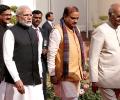
The President said that because of the policies of the government foreign investment has increased from $36 billion to $60 billion during the period.

Economic Advisory Council to the Prime Minister has identified ten themes, including economic growth and job creations that need attention.
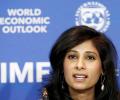
The IMF on Tuesday cut India's economic growth forecast by 0.5 percentage points to 9 per cent for the current fiscal year, with its chief economist Gita Gopinath saying that the slight downgrade is mainly due to the impact of the spread of the Omicron variant. "If you look at the 2021-22 fiscal year, we have a slight downgrade of -0.5 percentage points and for the next fiscal year 2022-23 we have a slight upgrade of 0.5 percentage points. So, growth for the previous fiscal year is now nine per cent and for this year now is at nine per cent. We moved it up slightly," Gopinath told reporters during a news conference in Washington. In its latest update of World Economic Outlook on Tuesday, the International Monetary Fund has cut India's economic growth forecast to 9 per cent for the current fiscal year ending March 31, joining a host of agencies which have downgraded their projections on concerns over the impact of the spread of Omicron on business activity and mobility.

The government on Thursday banned exports of non-basmati white rice to boost domestic supply and keep retail prices under check during the upcoming festive season. There would be no change in export policy of par-boiled non-basmati rice and basmati rice, which forms the bulk of exports, the food ministry said in a statement. Non-basmati white rice constitutes about 25 per cent of total rice exported from the country.
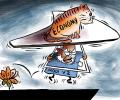
The reform priorities are clear: enhance savings, improve productivity. Just 25 basis points of moving interest rate up or down would not boost investment: Former RBI Governor Y V Reddy.

The ratings agency currently rates India at Baa3

The RBI has set up a panel to review ATM charges, and fees levied by banks.

The minutes of the December MPC meet reveal members felt the current spike in the headline inflation rate was due to a temporary supply shock on the food front, expected to moderate by the second quarter of 2020-21.

Fitch Ratings has revised India's GDP growth estimate to 12.8 per cent for the fiscal year beginning April 1 from its previous estimate of 11 per cent, saying its recovery from the depths of the lockdown-induced recession has been swifter than expected. In its latest Global Economic Outlook (GEO), Fitch said revision is on the back of "a stronger carryover effect, a looser fiscal stance and better virus containment." "India's second half of 2020 rebound also took GDP back above its pre-pandemic level and we have revised up our 2021-2022 forecast to 12.8 per cent from 11.0 per cent," it said. "Nevertheless, we expect the level of Indian GDP to remain well below our pre-pandemic forecast trajectory."

RBI awaits fiscal stance, inflation to cool off to decide on rates.

The global rating agency has, however, cautioned that India's fiscal position remains 'weak'.

The IMF on Tuesday projected a growth rate of 6.1 per cent for India in 2023, which is a 0.2 percentage point upward revision compared with the April projection. This is reflective of the "momentum" from stronger-than-expected growth in the fourth quarter of 2022 as a result of stronger domestic investment, the International Monetary Fund (IMF) said. "Growth in India is projected at 6.1 per cent in 2023, a 0.2 percentage point upward revision compared with the April projection," it said in its latest update of the World Economic Outlook.

Retail inflation during the first month of the current fiscal stood at 2.9 per cent, down from 4.6 per cent a year ago. Food inflation based on Consumer Food Price Index declined to a low of 0.1 per cent during the financial year 2018-19, the survey said.

Reducing policy rates is not enough. The key is to ensure banks lend to credit-constrained borrowers.

The Reserve Bank on Thursday marginally revised upwards the economic growth projection for the current fiscal to 6.5 per cent, from its earlier estimate of 6.4 per cent. Unveiling the first bi-monthly monetary policy of 2023-24 fiscal, RBI Governor Shaktikanta Das said the GDP growth in the first quarter of 2023-24 is expected at 7.8 per cent.

Arun Jaitley opted for a fiscal deficit of 3.9% in 2015-16.
"The central fiscal situation has improved but several underlying fiscal pressures are not entirely evident in the numbers," Reddy said at an event organised by the National Institute of Public Finance and Policy. In 2008-09, the Centre has budgeted to cut fiscal deficit to 2.5 per cent of GDP from 3.1 per cent in 2007-08.

In line with India's 'Neighbourhood First' policy, the largest share of aid portfolio has been granted to Bhutan with the allocation of Rs 2,068 crore.

Wholesale price-based inflation rose to an eight-month high of 0.26 per cent in November, driven by a sharp jump in food prices, especially onion and vegetables. The WPI inflation was in the negative or deflationary zone for the past seven months since April and was at (-)0.52 per cent in October. The last positive WPI inflation was recorded in March at 1.41 per cent.

Crypto assets should not be granted official currency or legal tender status, the much-awaited synthesis paper by the International Monetary Fund (IMF) and Financial Stability Board (FSB) has said ahead of the G20 leadership summit under India's presidency. However, the report has argued against a blanket ban on activities linked to crypto assets, explaining that such a move can be costly as well as technically demanding to enforce. Central banks should avoid holding crypto assets in their official reserve as they pose a risk to monetary and global financial stability, according to the synthesis paper.
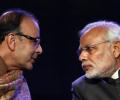
PM's announcement were focused on those most affected by the note ban.

The government has promised to keep the deficit at 4.1%

There is a case for analysing the fiscal deficit, separately for expenditure and investment.

The Reserve Bank of India has also expressed concern over rising inflation and said the prevailing level is above its comfort zone.
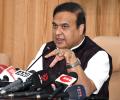
Sarma said his government was looking forward to the legislation on the Uniform Civil Code, which will be considered during a special four-day session of the Uttarakhand assembly that is starting from February 5.
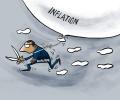
'If all goes well, we may well hit or even surpass the forecast growth rate.'

Zoram People's Movement (ZPM) leader Lalduhoma was sworn in as the chief minister of Mizoram on Friday.

India's biotechnology industry is pushing the government for fiscal incentives, import duty exemption and correction of policy that gives MNCs higher drug prices than "desi" producers, ahead of the Union budget.

Moody's Investors Service on Friday said India's economy is expected to contract for the first time in more than four decades saying economic damage owing to the coronavirus-induced lockdown will be significant with lower consumption and sluggish business activity. Even before the coronavirus outbreak, Indian economy already was growing at its slowest pace in six years and with the stimulus measures announced by the government falling short of expectations, the disruptions are likely to be greater. "We now expect India's growth to register a real GDP contraction for the fiscal year ending in March 2021 (fiscal 2020-21), from our earlier projection of zero growth," it said in a research note.

S&P Global Ratings has upgraded its long-term ratings on Tata Motors to speculative grade 'BB' with stable outlook on earnings improvements and potential deleveraging. The ratings agency had earlier placed Tata Motors in 'BB-'. As per S&P ratings, a BB grade is less vulnerable in the near-term but faces major ongoing uncertainties to adverse business, financial and economic conditions.

The government has at last commenced important structural reforms.

The government's capex spend is expected to rise and much of this is likely to be focussed on rural India, particularly for housing, roads and irrigation.


Highlights of Economic Survey 2020-21, tabled in Parliament by Finance Minister Nirmala Sitharaman on Friday.

The economy is projected to clock 7.4 per cent growth.
 © 2026 Rediff.com - Advertise with us - Disclaimer - Privacy Policy - Sitemap - Feedback - About us - Terms of use - Grievances